Physical Address
304 North Cardinal St.
Dorchester Center, MA 02124
Physical Address
304 North Cardinal St.
Dorchester Center, MA 02124


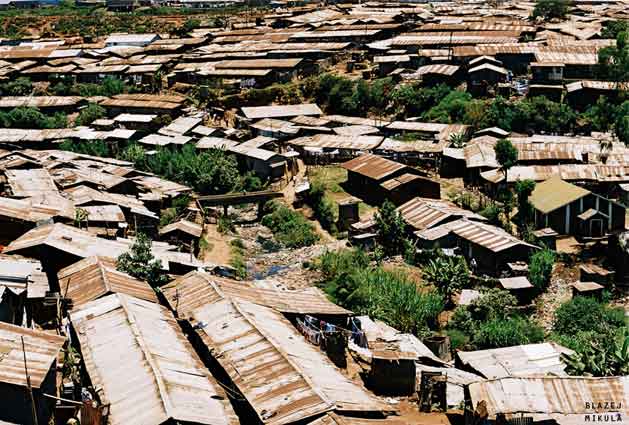
Inequality is one of the defining challenges of the 21st century—globally and here in Kenya. As young people struggle with unemployment, unaffordable housing, and stagnant wages, the gap between the wealthy and everyone else keeps widening. This debate isn’t new, but French economist Thomas Piketty’s influential work, Capital in the Twenty-First Century, offers a powerful lens to understand what’s happening today.
The documentary, based on Piketty’s bestselling book, explores how wealth becomes concentrated in the hands of a small elite and how modern economies risk sliding back into a system dominated by inherited privilege. Although the film focuses largely on Western nations, its insights mirror many trends unfolding in contemporary Kenya.
The Return of Extreme Inequality—Globally and at Home
The film’s central argument is clear: capitalism naturally concentrates wealth unless governments intervene. Drawing evidence from centuries of economic history, the documentary shows how the richest 1% have accumulated a disproportionate share of global wealth—similar to pre–World War I levels.
But this pattern is not limited to Europe or the United States. Kenya is experiencing its own version of this wealth concentration. From large family-owned conglomerates to political dynasties controlling key sectors of the economy, the gap between the ultra-rich and ordinary citizens continues to grow. According to reports from organizations such as Oxfam, Kenya is among the most unequal countries in the world, with the top percent holding more wealth than millions of citizens combined.
Just as Piketty argues that the West is drifting back toward “patrimonial capitalism”—where inherited wealth dictates opportunity—Kenya is seeing generational privilege shape access to education, land, jobs, and political influence.
History Shows Inequality Can Be Tamed—But Only Temporarily
The documentary traces the rare moment between 1930 and 1975 when inequality dropped significantly due to extraordinary events: two world wars, the Great Depression, and major economic reforms. Wealth owned by the elites was destroyed, prompting governments to adopt redistributive policies that supported the middle class.
Kenya witnessed its own version of this after independence, when land redistribution, nationalization efforts, and investments in public education attempted to level the playing field. But by the 1990s and 2000s, liberalization, corruption, and the rise of political capitalism reversed much of that progress. Today, inherited wealth plays an even bigger role in determining one’s destiny, especially in urban centers like Nairobi and Mombasa where land prices have soared beyond the reach of ordinary families.
Why Young Kenyans Feel the Weight of Modern Inequality
One of the documentary’s most relatable points is the pressure inequality places on younger generations. While their parents could afford land, housing, or education at reasonable prices, today’s youth face a different reality:
This mirrors Piketty’s observation that modern societies increasingly reward those who inherit assets—not those who work hardest.
In Kenya, this is clear in the advantage enjoyed by children of political and business elites, who can access better schooling, healthcare, internships, and global networks. Meanwhile, many talented young people must navigate unemployment or underemployment despite academic qualifications.
Is Political Will Enough to Reduce Inequality?
The film ends by suggesting that inequality can be solved through strong state intervention, progressive taxation, and redistributive policies. While these solutions make sense in theory, Kenya’s political landscape complicates this approach as politicians themselves often benefit from class privilege. In Kenya, political elites frequently control vast business empires, making it difficult to implement reforms that threaten their own interests. Anti-corruption efforts remain weak, and tax enforcement often targets small businesses more aggressively than wealthy individuals or corporations.
Thus, while Piketty’s policy recommendations are valuable, Kenya’s inequality problem is deeply intertwined with governance, leadership, and accountability.
Rethinking Development: Beyond GDP
The documentary also questions the long-held belief that economic growth automatically improves people’s lives. Kenya’s GDP has grown over the years, but this hasn’t translated into equal opportunities or improved welfare for most citizens.
Development experts now argue that measuring well-being requires more than income statistics. Factors such as access to quality education, healthcare, clean water, social mobility, and political inclusion matter just as much—if not more.
Piketty emphasizes that birth circumstances remain one of the most powerful predictors of life outcomes. In Kenya, this truth is visible in the stark contrast between children born in affluent neighborhoods like Karen or Runda and those raised in informal settlements in Kibera or Mathare.
Achieving true equality requires ensuring that all children start life with real opportunities, not just theoretical rights.
Why Piketty’s Ideas Matter for Kenya’s Future
Capital in the Twenty-First Century is more than a documentary about the West—it’s a mirror that reflects the challenges facing Kenya today. Rising inequality, political capitalism, unaffordable living costs, and the growing influence of inherited wealth are shaping the country’s future.
For Kenya to break the cycle of generational inequality, both government and society must rethink what inclusive development looks like. Redistributive policies, stronger institutions, fair taxation, and expanded access to quality public services are crucial steps. But more importantly, Kenya needs leaders willing to confront the power structures that keep inequality alive.
As the global conversation evolves, one thing is clear: a fair society is not created by accident—it requires deliberate, sustained effort.